

Implants are possibly one of the most reliable, safest dental procedures currently available in the UK. Gone are the days of unnatural looking and poorly fitting artificial teeth; the latest technology can give patients beautiful new teeth that look and feel completely natural. In Liverpool, we have a wide array of implant options available, including single-tooth replacements, full-arch implants (All-on-4) and more.
You may have heard about the following benefits to dental implants:
- Preventing future bone loss
- Supporting the teeth above and next to the implant
- Providing an aesthetically pleasing replacement
- Lasting for 20-30 years or longer
However, like any dental procedure, there are a few risks to having implants, and they are not for everyone. It is important to know any possible disadvantages that may arise so that you can make an informed decision on whether they are right for you.
Here are a few potential problems it’s important for patients to be aware of:
- Lengthy recovery period
- Sometimes more expensive than other dental procedures
- Implant components can fail
- Implants involve surgery and may need bone grafting
- The implant site can become infected (peri-implantitis)
We’ll now go a little deeper into each of these.
Surgery
The dental implant process does involve a surgical procedure. This is done under local anaesthetic or sedation. Many patients report that dental implants are less painful than other dental procedures such as tooth extractions or root canals. Throughout the process, our friendly dental team will ensure that you are comfortable and relaxed.
While you may feel some pressure while the implant is being placed, and soreness or mild discomfort following your surgery, this should quickly disappear in a few days, and can usually be treated with over-the-counter medications such as paracetamol. We will also prescribe you antibiotics and give you detailed instructions on how to care for the implant site as it begins to heal.
We usually recommend avoiding hard or crunchy foods, and very hot or cold drinks, for the first few days. During the first few hours after your surgery, we also suggest using an ice pack on your cheek to bring down any swelling.
Bone grafting
Some patients don’t have enough bone in the area where their teeth need to be replaced. In that case, your dentist might tell you that you need a bone graft. We usually take bone from elsewhere in your jaw, from your hip or another part of your body, or from another source, for example, a synthetic material. Before you have your bone graft, our dental team will tell you how to look after the site following surgery.
Recovering from dental implants
It is true that dental implants usually involve a recovery period of 3 to 9 months, which is longer than many other procedures you may have had at the dentist. The entire process can also involve several check-ups and consultations to ensure that things are going well. If you are planning to have dental implants for the first time, or have been told you may need them, the idea of such a lengthy healing phase can feel overwhelming.
The recovery phase for dental implants is generally divided into two parts.
Immediate recovery (first few weeks)
Immediately after your implant has been placed, you’ll have stitches and will need to be careful with what you eat or drink. Initially, you will need to stay hydrated and avoid harder or crunchier foods. However, the good news is that this will only last around a week or two and you’ll soon be able to enjoy the foods you love.
Long-term recovery (3-9 months)
It usually takes up to nine months for the bone around your dental implants to fully recover. Once this has happened, your new crown can be fitted. It’s often possible, especially if you are having All-on-4 or All-on-6, to have temporary crowns before you get your new tooth. During this time, you can eat and drink normally, but should avoid injury to your mouth (for example, while playing contact sports or other strenuous exercise) in order to avoid the implants being damaged.
Cost of dental implants in Liverpool
One of the things that can worry people who are thinking of having dental implants is the cost. It is true that this can be significantly more than other procedures such as fillings or extractions, due to the surgery involved and the fact that your implants will be bespoke and custom-made for you.
At Pall Mall Dental, while our implants start from £x, we offer 0% finance as well as a choice of flexible payment plans. We believe in making dental treatment affordable for all our patients.
However, while dental implants can cost more than other treatments, they have transformed the lives of many patients across Liverpool. The fact that they can last for decades and possibly a lifetime makes them a long-term investment in your health and smile.
When implant components fail
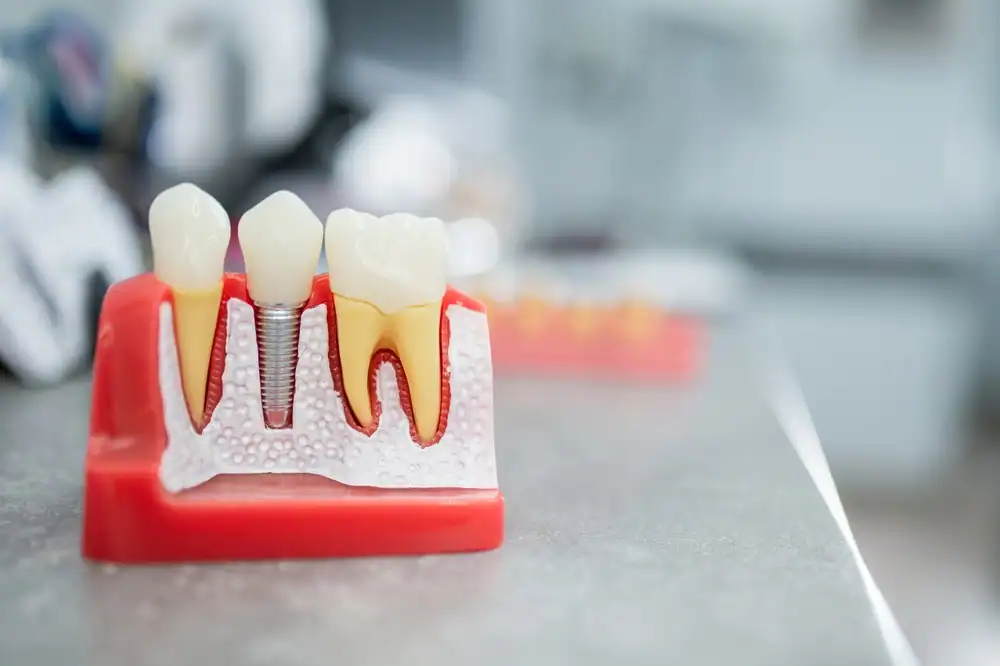
No dental procedure is 100% foolproof, and unfortunately implants are no exception. Dental implants are made up of four main parts:
- The implant itself, which is inserted into the bone during surgery
- The abutment which attaches to it and supports your new tooth
- The screw attaching the abutment to the implant
- Your new artificial tooth (the permanent crown)
Dental implants are made of medical grade titanium, an extremely strong, sturdy metal. While the implant is healing, it gradually fuses with your bone. This process is known as osseointegration and will help to support your new crown once it has been placed. The titanium implants themselves are very unlikely to fail, with this only occurring in 5-10% of cases.
Some people do not have enough bone for implants to be secured, so you may need a bone graft. If most or all of your teeth are being replaced, All-on-4 implants typically require less bone density than other types, so you may be able to have these.
If you are concerned, you can reduce the risk by maintaining good oral hygiene, as well as going to check-ups regularly so that we can spot any problems. If you smoke, you can reduce the risk of an implant failure by giving up. A list of resources to help you quit is available here.
Dental crowns are a little more likely to fracture or crack if they are placed on top of implants than natural teeth. This is because a tooth has natural cushioning due to the root and the ligaments in your jaw. However, this is preventable by not biting on objects such as pens or opening things with your teeth.
However, implants are usually far more durable than alternatives such as dental bridges or dentures, which tend to need replacement every 5-10 years. You can also take care of implants the same way as your other teeth.
Infection
Dental implants cannot develop cavities, but they do sometimes become infected. Just like natural teeth, plaque and tartar can build up around them. If this isn’t cleaned properly, eventually your gums could become irritated or inflamed. Ultimately, this could lead to infection of the gums and the surrounding bone, or peri-implantitis.
Certain health conditions such as diabetes can put you at additional risk of infection, but this does not necessarily mean that you cannot have implants; your dentist will be able to give you a full assessment.
Keeping up with your oral hygiene, brushing your teeth twice daily and flossing regularly, as well as continuing with regular dental appointments, can all help reduce the likelihood of infection occurring once you’ve had an implant.
Do you recommend dental implants?
Yes – we do. They look and feel natural, and are suitable for a wide range of situations. Looked after well, they can last for decades. At Pall Mall Dental, we will help you decide which dental implants are right for you, with detailed instructions on how to take care of them – as well as alternatives which may suit you, such as dental bridges or dentures.
We’ll also provide you with a full breakdown of costs, with no hidden fees, and can provide affordable treatment plans.

Frequently Asked Questions
How painful are dental implants?
As dental implants are placed under local anaesthetic, the procedure itself should not be painful. Some soreness following a dental implant is normal, but this can be treated with ibuprofen or paracetamol for the first couple of days. However, if this worsens or does not subside after around a week, please get back in touch with us for an appointment.
I’m diabetic. Can I still have implants?
You can usually have dental implants if you’re diabetic, but if your diabetes is poorly controlled, we may advise against it due to the increased risk of implant failure or infection. During your initial consultation, we’ll discuss the benefits and risks and help you decide on the best option.
I have dentures – can I have dental implants instead?
Many of our patients successfully replace their dentures with implants. However, we will need to make sure that you have enough bone in your jaw in order for the implants to secure properly, which might involve a bone graft. During your consultation, we will examine your jaw and gums, then go through your treatment options.
It’s also important that you are in good general health and that any gum disease is treated before you have your implants – if this is a problem, we can help you treat it.
Can you help me with dental anxiety if I’m having implants?
If you’ve had bad experiences at the dentist before it’s understandable to be anxious about implants. We do suggest speaking to our team before you have the procedure, especially about any specific concerns you have, and letting them know about any previous issues.
It may be helpful to agree on a signal you can use with them, such as raising your hand, to
show that you need a break. Some patients also find it helpful to choose a point in the room to focus on such as a picture, or to listen to relaxing music during the process.
Our friendly team have treated hundreds of patients in Liverpool and are here to help.